
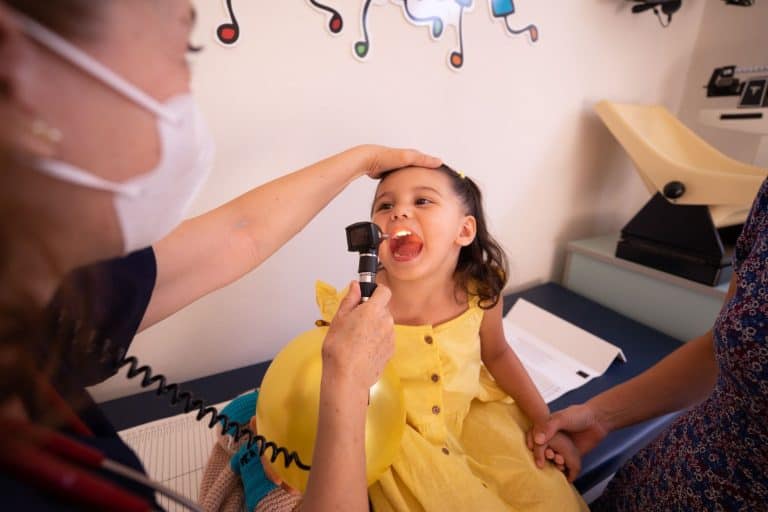
A sore throat is one of the most common reasons children visit the pediatrician. But how do you know when it’s just a virus—and when it might be strep throat?
What is strep throat?
Strep throat is an infection caused by Group A Streptococcus bacteria. It is most common in school-age children and tends to occur more often during the winter and early spring.
Classic symptoms include:
- Sudden sore throat
- Pain or difficulty swallowing
- Fever
- Swollen or tender lymph nodes in the neck
- Red, swollen tonsils, sometimes with white patches
- Headache or stomach pain
- Nausea or vomiting, particularly in younger children
Interestingly, cough and runny nose are less typical of strep throat. When those symptoms are prominent, a viral infection is often more likely.
Does every sore throat need a strep test?
No. Many sore throats are caused by viruses, and antibiotics won’t help viral infections.
When your child’s symptoms suggest strep, your pediatrician may perform a rapid strep test. If the rapid test is negative, a throat culture may sometimes be recommended in children to make sure a strep infection wasn’t missed. (Other strains of Strep exist besides Group A).
Testing is important because symptoms alone cannot always reliably distinguish strep from a viral sore throat.
How is strep treated?
If strep is confirmed, antibiotics are prescribed. Amoxicillin and Azithromycin are commonly used first-line treatments for children who are not allergic to these medications.
Antibiotics can shorten symptoms somewhat, reduce the risk of complications, and help decrease the spread of infection. Group A Strep is a known cause of bloodstream infections, acute kidney failure, and rheumatic fever.
Your child should take the entire course of antibiotics as prescribed, even if they feel better after a day or two. This will help fully clear the bacteria so it does not return a few weeks later.
Sometimes, people are carriers of strep, which can lead to recurrent positive tests. This may be important to test for when you and your child are feeling well.
When can my child return to school?
Children with confirmed strep should generally stay home until they are fever-free and have been on appropriate antibiotics for at least 12–24 hours, while also following their school’s specific policy.
When should I call the pediatrician?
Call if your child has:
- A significant or persistent sore throat
- Difficulty swallowing
- Persistent fever
- Significant swelling of the tonsils or neck
- Repeated episodes of suspected strep
- Symptoms that are getting worse rather than better
Seek urgent medical attention if your child has difficulty breathing, cannot swallow saliva, is drooling excessively, has significant neck swelling, or appears seriously ill.
The bottom line
Not every sore throat is strep—and not every sore throat needs antibiotics. The combination of symptoms, examination, and appropriate testing helps determine the right treatment.
When your child has a sore throat, don’t worry about figuring it out on your own. That’s what your pediatrician is there for: to determine whether it’s a virus that needs time or strep that needs treatment.