
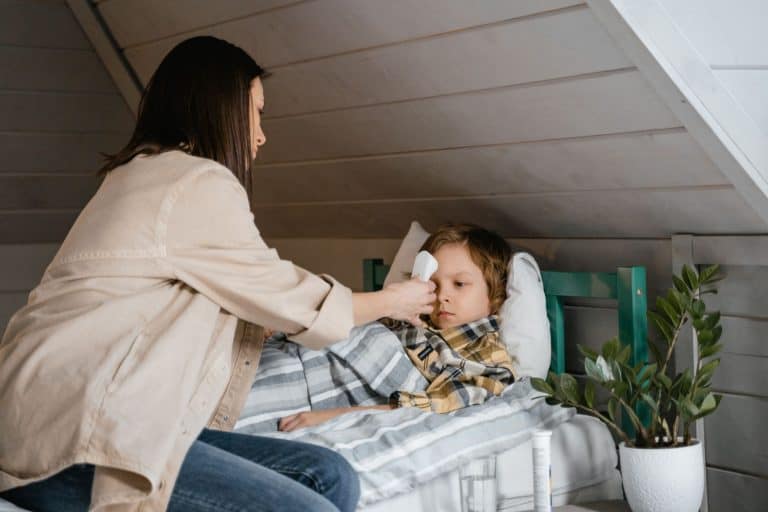
Few things make parents more nervous than seeing their child’s temperature climb. The good news? Fever is usually your child’s friend, not their enemy. It is one of the body’s natural ways of fighting infection.
But how do you know when a fever can be watched at home—and when it deserves a call to the pediatrician?
First, remember: the child matters more than the number
A fever is generally defined as a temperature of 100.4°F (38°C) or higher. While the number on the thermometer is useful, your child’s overall appearance and behavior are often more important.
A child with a 103°F fever who is drinking fluids, interacting with you, and occasionally playing may be much less concerning than a child with a 101°F fever who is unusually sleepy, difficult to wake, or having trouble breathing.
When you can usually watch at home
Fever is very often the highest early in the illness. If the child has been well prior and seemed to “get a fever out of nowhere” then a higher fever is expected. Over the course of the next few days the fever will continue to spike but should be trending down. Most viral illnesses will have fever for 2-3 days and can be managed at home. If your child is:
- Drinking reasonably well
- Urinating normally
- Breathing comfortably
- Waking up and interacting normally
- Having periods where they feel or act better
- Not experiencing significant pain
…it is generally reasonable to focus on fluids, rest, comfort, and observation.
You don’t necessarily need to make the thermometer normal. The goal of fever medicine is comfort, not a specific temperature. Acetaminophen or ibuprofen can be used when appropriate for your child’s age and circumstances.
When should you call the pediatrician?
Give us a call if your child has:
- A fever lasting more than 3 days or new fever after seeming to improve
- Significant or worsening pain
- Persistent vomiting or inability to keep fluids down
- Signs of dehydration, such as very little urination, dry mouth, or no tears
- A new or concerning rash
- Pain with urination or other symptoms suggesting a urinary infection
- A child who seems to be getting progressively worse rather than better
And remember that age matters. Any baby younger than 3 months with a temperature of 100.4°F (38°C) or higher should be evaluated promptly, even if they otherwise seem well.
When is a fever an emergency?
Seek immediate medical attention if your child has a fever accompanied by:
- Difficulty breathing
- Blue or gray lips or skin
- Severe lethargy or difficulty waking
- A seizure
- A stiff neck with severe headache or unusual behavior
- Signs of severe dehydration
- A rapidly spreading purple or non-blanching rash
- A child who looks seriously ill to you
One final thought for parents
Treat the child, not the thermometer.
Fever itself is rarely dangerous. What matters most is how your child looks, acts, drinks, breathes, and responds to you. When your instincts tell you that something isn’t right, don’t hesitate to call your provider.